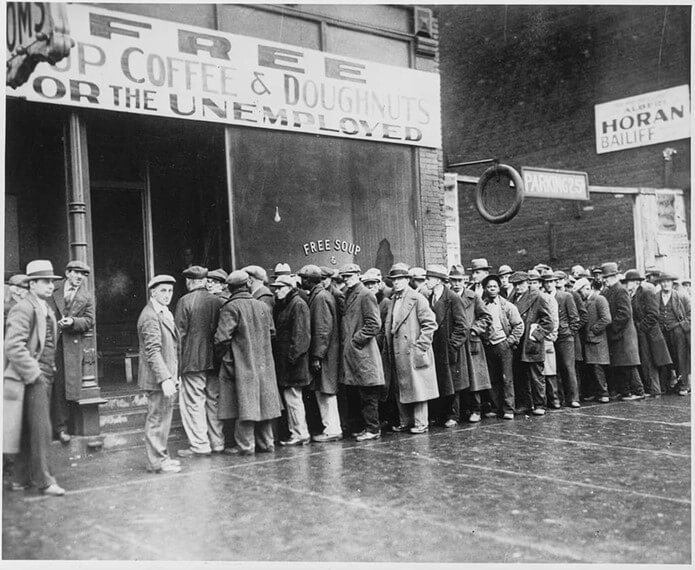
The Wall Street Crash in 1929, even though it in part led to the Great Depression, combined with the impact of bank closures, the collapse of the supply of money, and the impact of the Smoot-Hawley Tariff , the laws created after that led to the formation of the corporation as well as ensuring due diligence to protect investors from fraudulent practices. In this article, you will learn about the history of trade shows in the 1930s
In 1932, the aftershocks of the crash were still being felt, with NYSE stocks losing 83% of their value.
The Smoot-Hawley Tariff was signed into law by President Hoover to protect American production by putting higher taxes on goods from other countries. However, this led to a big drop in American trade, which made the Depression last longer and gets worse around the world.
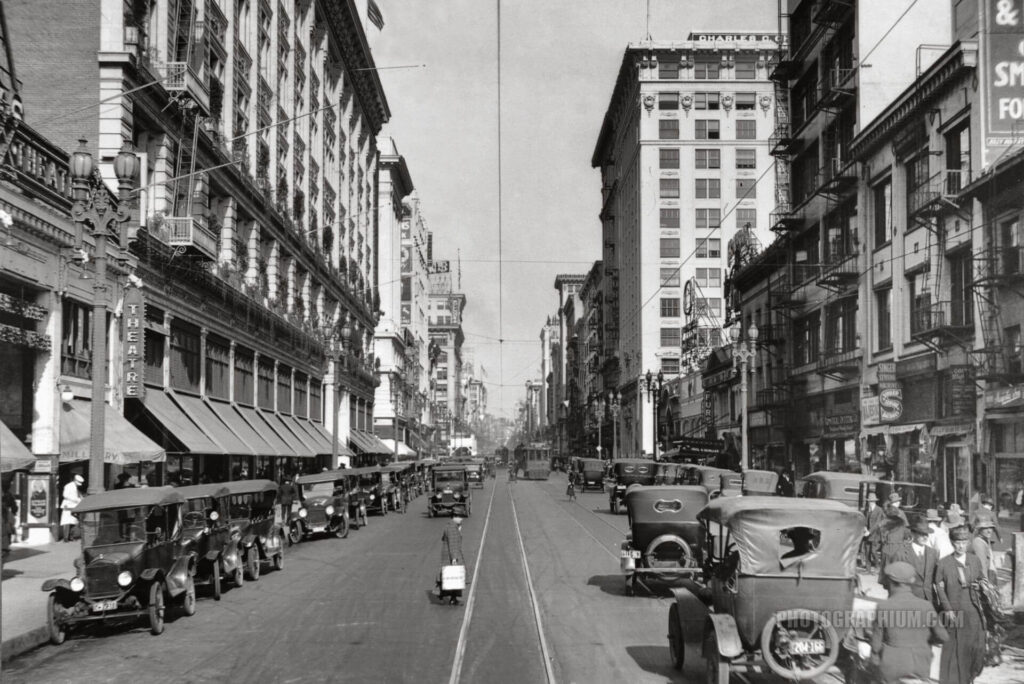
The 1930s were, in my opinion, the beginning of the modern age in the sense of economics, with the creation of the US corporation by those companies that survived the Great Depression, amongst which were Ford Motor Company, General Electric, The Yellow Pages, Bulova Watch, American Tobacco, Standard Oil Co. (founded by JD Rockefeller), Columbia Pictures, Paramount Pictures, Coca-Cola, and Deere and Co.
Innovations such as washing machines, fridges, sliced bread, nylon toothbrushes, scotch tape, and the car radio, as well as manufacturing and technology, drove the need for fairs and exhibitions, building on the tradition of the Chicago Fair in 1893.
Also Read: Brief History of Trade Shows
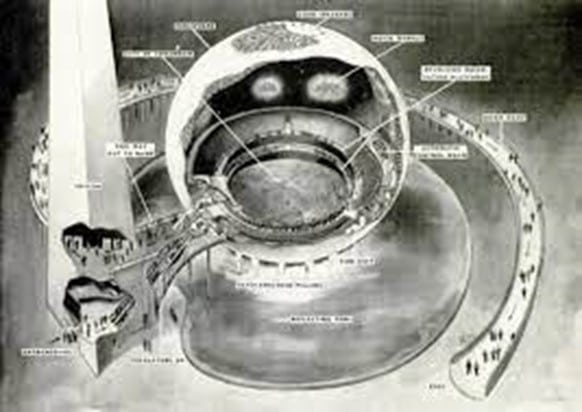
The New York World’s Fair, “Building the World of Tomorrow,” opened in April 1939 and ran until October 1940 during the summer months. It was based on the idea that technology and science would give people freedom and make the economy better. The fair offered hope as the economy was improving, but there was confusion with World War II brewing, which would break out only months later. The Tylon and Perisphere formed the centre of the fair. More than 100 years later, it is still standing.
“I welcome the celebration you are now beginning. It is timely not only because it marks a century of accomplishment but because it comes at a time when the world needs nothing so much as a better mutual understanding of the peoples of the earth.” The quote is an excerpt from President Franklin D. Roosevelt’s message to the Chicago World’s Fair on May 27, 1933.
The Grand Exhibition shared many similarities with many fairs held in the United States during the decade. President Roosevelt’s New Deal used expositions to help the economy and speed up the recovery by giving thousands of people jobs all over the country.
As war loomed in Europe and a better future near the end of the decade, businesses and politicians promoted the idea of nations working together for peace. Fairs were created and funded with political goals in mind to celebrate their global vision.
The Tomorrow Home, which was built at fairs and sponsored by business owners who sold appliances to showcase new electric appliances, is an example of this. However, many of the visitors didn’t have access to electricity, nor could they afford the appliances. The fairs were about aspirations and a dream. I surmise this may well be the kernel of the American Dream.
Now that we understand the massive economic upheaval that was the backdrop to the fairs in this decade, we’ll now discuss the New York Fair in more detail to discuss the innovations that were launched.
Television First Mass Broadcast
The first public television broadcast was made to an audience of 1000 people in the New York area of the opening as well as aspects of the fair.
This innovation was incorporated into the Fair, where visitors could see themselves on TV as well as participate in demonstrations at GE and other stands where TVs were sold to the public.
Nylon
This plastic fabric, created by Dupont, was used to create nylon toothbrushes in 1938. It was launched at the Fair, demonstrating America’s technological and scientific advances.
Architecture
What set the Fair apart was that permanent buildings were constructed for the exhibitors. The country or company sponsors encouraged architects to be creative and innovative. New innovation was behind many of the products being sold, and an emphasis was placed on educating visitors on how they could use the exciting new products.
3D Theatre with air conditioning
Chrysler showed the manufacturing process of a Plymouth in a 3D theatre that was air-conditioned, a recent invention.
The Light Bulb
At the time, GE owned the patent for the light bulb, which they used in their stand-by, among other things, making streets brighter than they had been before. After the fair, three large-scale manufacturers located themselves in the general area and began making light bulbs.
Zones
The area allocated to the Fair was enormous. To provide some scale, the amusement park covered 230 acres (93 ha) of land. The Aquacade, featuring water and musical extravaganzas, formed part of the amusement park.
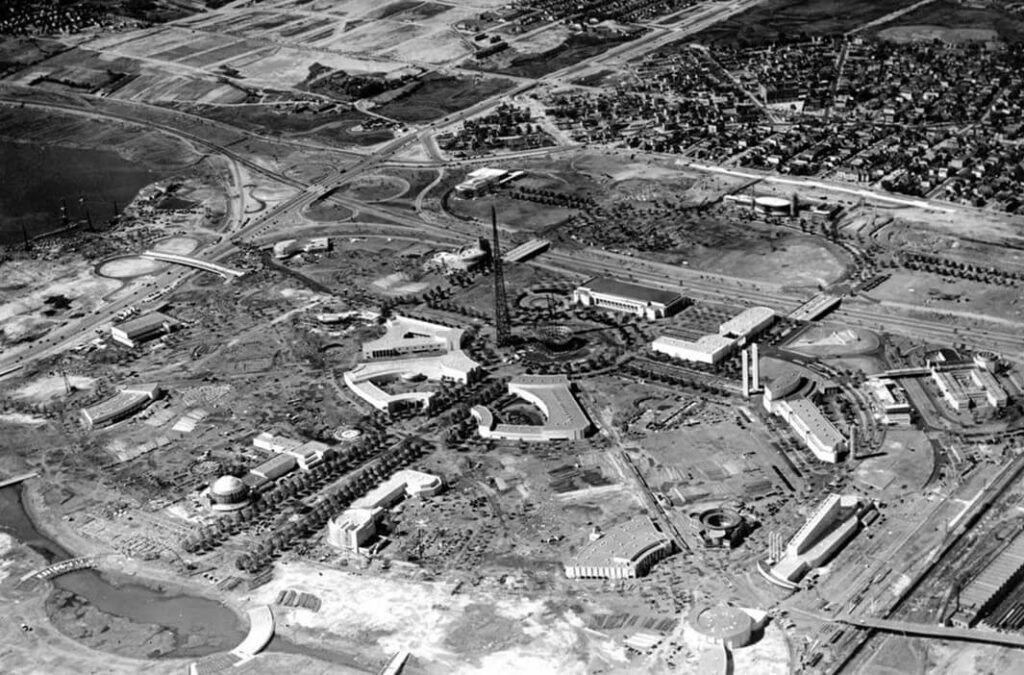
Some of the zones included:
Communications and Business Systems – IBM demonstrated an electric typewriter and an electric calculator that used punch cards. Basic computers decades later would also use punch cards.
Many of the exhibits focused on the home, DIY, and the “Town of Tomorrow,” which featured 15 demonstration homes outfitted with the latest appliances and innovations.
Government Zone: 60 foreign governments displayed treasures that varied from a copy of the Magna Carta, the first postage stamp, the Italians celebrated the inventor of the radio, Guglielmo Marconi, Vermeer’s painting The Milkmaid from the Netherlands was on display, amongst others.
Production and Distribution Zone
Companies that manufactured and distributed goods exhibited in this zone. Some areas focused on specific specialties such as pharmaceuticals, metals, electrical goods,
Transportation Zone
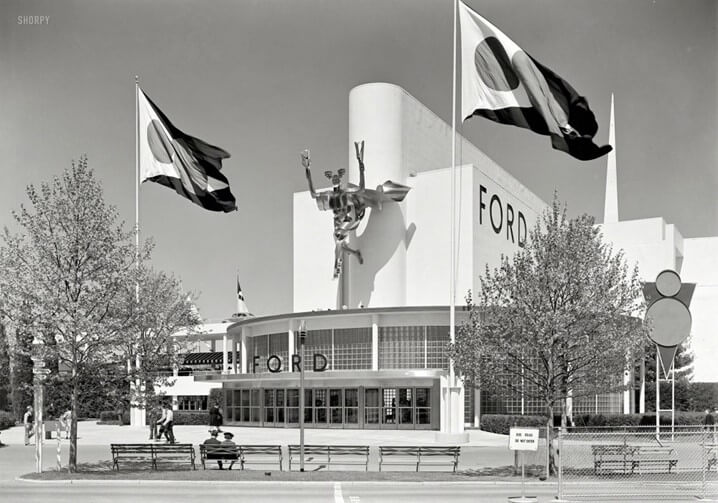
Each of the major vehicle manufacturers of the time was represented: Ford, Chrysler, and General Motors.
General Motors invested in a diorama depicting a fictional town in the US. As visitors drove through the diorama, the scale increased from miniature to life-size. A car dealership, as well as a shop selling appliances, were included in their exhibit.
Ford’s building included a racetrack on the roof where racing car drivers navigated an endless loop.
I think the lessons learned are relevant to modern living and events are the following:
Infrastructure
Even though many of the buildings that were built, as well as the entertainment areas, no longer exist, activities such as demonstrating how things were made and taking visitors on a journey through their vision of their country or company are still relevant today.
A new train line was created to accommodate the sheer volume of visitors. The area allocated was previously marshland that was seen to be rejuvenating a depressed area whilst also creating much-needed jobs for thousands during construction, as well as manning booths etc.
Entertainment
We all respond to fun as, let’s face it, we haven’t really grown up! Tapping into the fun aspect of our personalities works to your advantage. That’s why you see balloons, flashing lights, giveaways, popcorn, and so much more at events.
Vision
The fairs in the 1930s were on a massive scale to encourage people to believe that life could and would get better after the Depression and World War 1. However, towards the end of the decade, war was once again looming in Europe, so the Fairs became a rallying cry for peace amongst nations, to understand each of our differences and celebrate what makes each nationality great.
With some of the inventions mentioned, it was also a great time for innovation. The Fairs were a medium to share these inventions and how they were going to change their lives.
Conclusion
Any trade show or exhibition tells a story, irrespective of whether it is B2B or consumer-focused. The exhibitors share their vision of what they would like visitors to purchase, think about, influence, dream etc.
Even though the fairs were on a scale we no longer see besides the Olympics, modern events still tap into human nature and our five senses to entertain, educate, and influence. Perhaps when thinking of new ideas for your next event, you may want to take a trip back for inspiration. If it’s old enough, it becomes new, so they say.