The decade of the 2020s saw a significant shift in how trade shows are organised and executed. Many industries have had to change how they do business because of the COVID-19 pandemic. This has had a big effect on tradeshows. In this article, you will learn about the history of trade shows in the 2020s
Read Also: History of Trade shows in the 2010s
Most of us woke up late in 2019—with momentum continuing into 2020—to reports of a new virus out of Wuhan, China, of a new infection spreading. It would become known as COVID-19 and would change the world. In late March, most countries worldwide were in lockdown to deal with a wave of infections that saw hospitals not coping with the influx, mortuaries overflowing, and freshly dug graveyards on a scale not seen since the Spanish Flu epidemic.
One of the biggest changes in the 2020s has been the shift towards virtual and hybrid tradeshows. Because of travel restrictions and safety concerns, many event organisers are now hosting their events online. This has made it possible for exhibitors and attendees to take part from anywhere in the world. This has made tradeshows easier to get to than they used to be.
Every event manager was calculating how they were going to continue with their calendar of events. No one knew how long it would last. Every day, countries report the number of infected people and deaths. The mental impact of staying indoors for weeks took its toll. Many businesses closed their doors. People lost jobs. The only thing certain was uncertainty itself.
However, the event sector globally responded by offering venues for vaccination centres or makeshift hospitals at the beginning of the pandemic.
But, as always, people change. We adapt to our situations and find ways to deal with them. Event managers would lose millions if they had to refund exhibitors, sponsors, and delegates. So, another solution was sought. A more advanced digital event solution was the answer.
Another trend in the 2020s has been the focus on sustainability. Many tradeshow organisers have taken steps to make tradeshows less harmful to the environment, such as using green energy and recycling programmes. This has helped create a more responsible and eco-friendly industry.
In 2021, the first and largest digital trade fair took place at Hannover Messe, with 1800 exhibitors and 95,000 visitors.

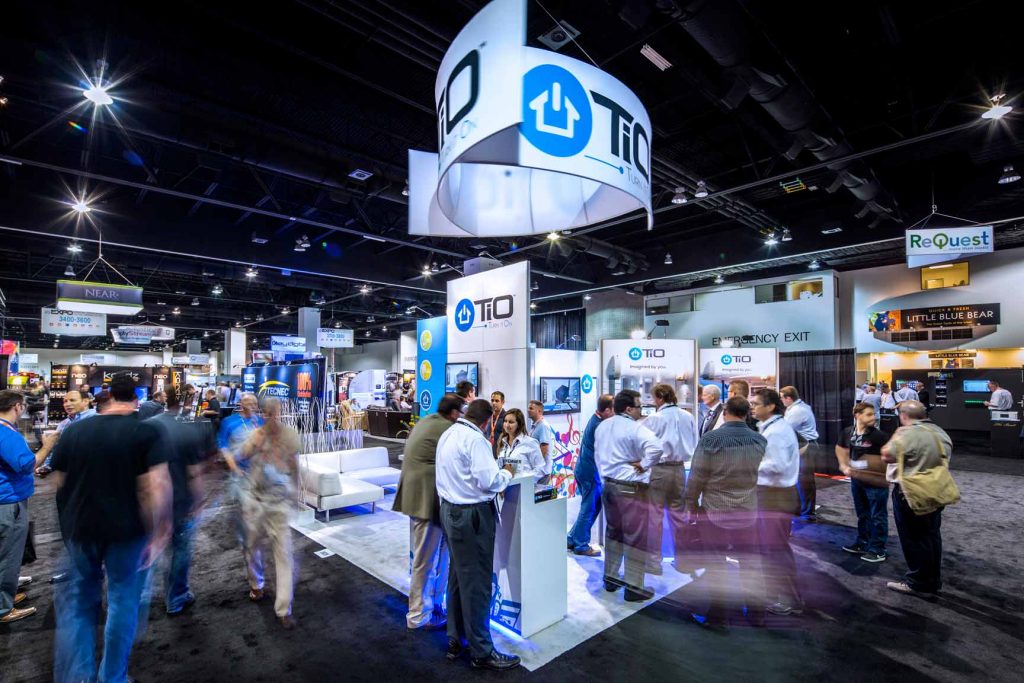
Masks became optional in many countries around the world in 2022. The events industry is gradually reviving. Below is an image of the Hannover Messe in 2022, showing no masks and looking more normal.

A number of things changed as a result of the pandemic, mainly the staggering increase in global online shopping and the acceptance of doing business online from home. However, as we know, events are about getting in touch with your 5 senses and engaging with people. We all craved being around people after the lockdown. I remember rushing out of my house with my dog Bella to go for a walk in order to get out of the confines of my house and feel normal again.
The 2020s have also seen the emergence of new technologies that are being used to enhance tradeshows. Virtual and augmented reality, for example, have been used to give attendees more immersive experiences, and artificial intelligence and machine learning are being used to make events run more smoothly and be better organised overall.
Read Also: History of Trade Shows in the 2000s
Digital events were, in my opinion, a stopgap but not a replacement. I found them much harder work, you end up charging less, and your numbers don’t really increase. Each software solution has its own pluses and minuses, but overall, I found them to be overpriced for what you’re getting and also felt that they weren’t really talking to the customer’s needs of reaching delegates and focusing on improving the link between visitors and exhibitors. Exhibitors have to do more work to start conversations online than they would at a live event.
You saw in your own sphere how COVID affected the many small businesses that make up the event sector. As you start to get going again, I hope that you support the next generation of small businesses. Extend the wonder of what trade shows offer businesses, as all businesses have a level playing field; what sets them apart is their creativity and ability to connect and follow up.
There were many downsides to the lockdown that we will more than likely not know the effects of till much later, but there were also upsides. One of those was an innovation. Not much has changed in exhibitions since the creation of the shell scheme, but an enterprising South African company did just that.
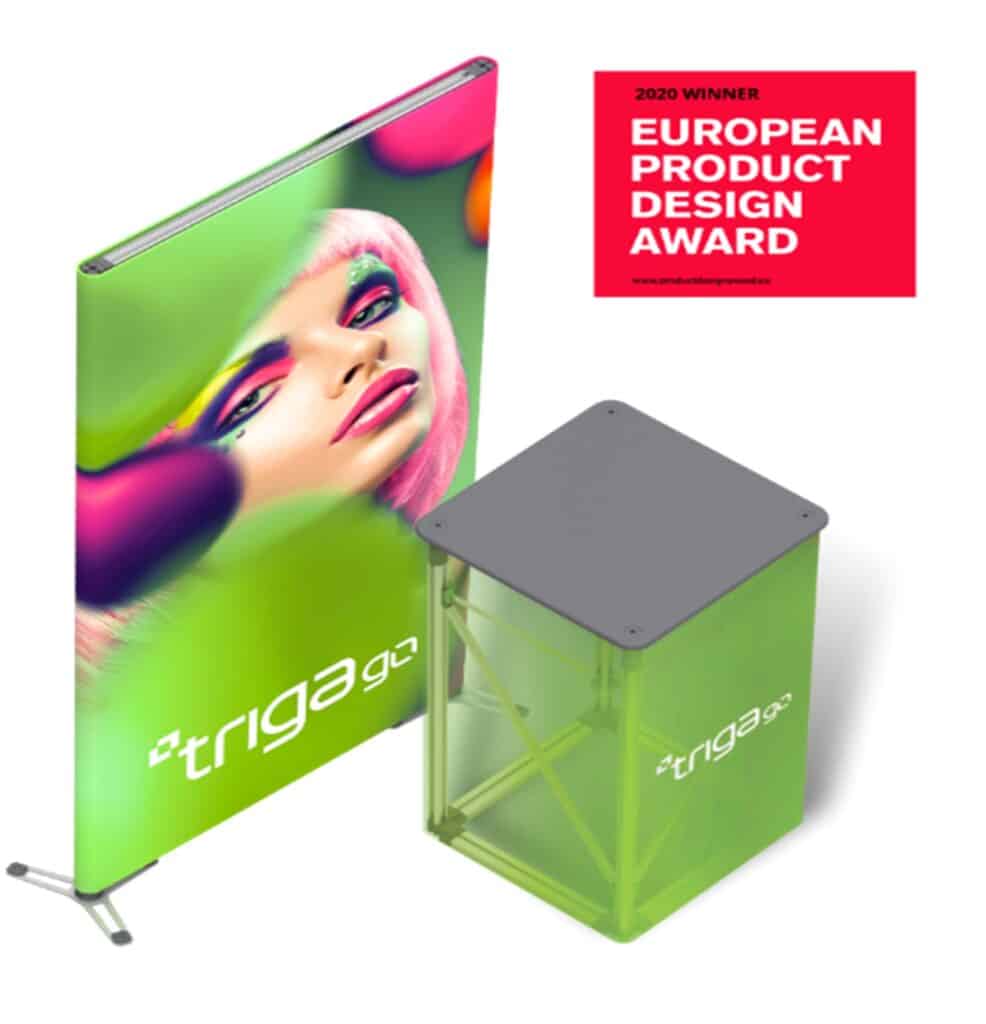
In 2020, the company Gawk created TRIGA® Go. It won the European Product Design Award in 2020. What is TRIGA® Go.? “..it allows for super-quick assembly of banner walls, towers, counters, and small and medium-sized textile display stands. “The unique, patented TRIGA® Go tensioner results in wrinkle-free, tightly tensioned, and seamless prints with no compromise on the solid design you’d expect from a TRIGA® system.”
We’ve spoken before about technology and innovation creating trade shows and exhibition opportunities, but one area we haven’t discussed is the natural world. It is prescient that this article was written at the time of COP27.
In the last two years, countries have been hit by disasters like fires, floods, volcano eruptions, hurricanes, etc., which have caused a lot of damage. Food security, power cuts, small growers’ organic farming, and people wanting to live off the grid are coming to the fore. All of these are opportunities for new niche events in the coming years and are also predictors of people wanting to connect to the earth and each other.
I think the challenges facing the sector in the coming years are affordability and relevance. As we hurtle towards another recession, companies will be counting their pennies. Companies will have to spend their smaller budgets on events that offer more than just a return on investment (ROI).
Regarding relevance, I believe we need to spend more time and energy to really understand prospective sectors and talk to people in the relevant sector to understand what their challenges are and how a conference, exhibition, or trade show can be more than just relevant but desirable, making it a must-have to attend.
In my nearly 30 years of creating events, I have found that if you can find the right buttons, and by that, I mean the right content, coupled with a few key players acting as champions, that combination can ensure the longevity of an event. If you keep solving problems that your potential customer is having, they will be more likely to put money aside for you. Eventually, you will become a fixture and a line item in the budget. I think the convex model will become more popular because it gives the delegates and the exhibitors the best of both worlds.
Read Also: Building an Exhibition Stand
Event managers now need to be even more creative and really brave to try wacky ideas they’ve never tried before. There is so much noise out there that being heard is going to become harder, but the in-person event will not be replaced anytime soon, as we learned during the pandemic.
Many event managers have felt limited because they thought they could only put on events that fit within the venue. When I returned to South Africa after spending 10 years abroad, I created a context for public sector hospitals and created tours of hospitals where management had implemented innovation.
The series of articles has shown the history and evolution of how events respond to the world but also change it.
Event managers affect their fields by choosing speakers and getting change-makers to talk and think. We create platforms for sharing new ideas, but I believe that also comes with responsibility. I’ve seen too many companies churn out events without really understanding the sector enough to add value, and that hurts everyone, including those who want to make a quick buck and oversell to exhibitors and sponsors. Because delegates and exhibitors have finite budgets, when they attend an event that doesn’t add value, they get turned off from attending others. They don’t forget. Once trust is broken, it takes a really long time, if ever, to regain it, and it really isn’t worth losing it in the first place.
Even though the pandemic made things harder, the tradeshow industry has continued to change and grow in the 2020s. New trends and technologies are changing how we do business in the future.