
With so much choice, it’s challenging to get it right!
Your marketing team has included trade shows in the marketing plan for the year, and your job is to source the trade show that provides your company with the best level of exposure to delegates that make buying decisions and best meets the marketing plan goals.
However, in my biassed opinion, trade shows offer the best value for money as it shortens the sale, buying, and networking cycles. Moreover, after the pandemic, it provides the added benefit of one-to-one interaction with a good dose of fun thrown in.
But not all trade shows are created equal. Various factors need to be considered when making your selection of trade shows.
Why is it important to be selective with Trade shows?
Trade shows are an investment in the time of staff, travel, stand costs, and other peripheral assets, so getting in front of the right audience in the right location can make or break your success.

Besides the goals outlined in your marketing plan, here are three key points to consider:
Higher ROI
ROI, or return on investment, is, I believe, key to continued success. In short, ROI is the benefit you receive directly or indirectly from the investment made in exhibiting at trade shows. ROI attempts to quantify that figure by taking several factors into account.
Another measurement that can be used is Return on Objectives (ROO). This can be used if your goals are not sales-based. An example is lead generation. The formulae used are:
Cost of investment (Exhibit costs at 100k)
Goals (400 leads) = Cost is 250.00 per lead.
Once you have a short list of possible trade shows in mind that fit your needs, research as much as possible using social media, the event website, etc. to get as much feedback as possible from delegates and other exhibitors’ experiences to form an impression of each trade show and the rate that would most suit your needs.
Use the ROI formulae given the information you have to play out scenarios to determine which trade show could provide you with the best ROI.
Use a dedicated platform like Tradefest.io, An ingenious site that makes your life easier and so much more. Tradefast lists trade shows, conferences, and exhibitions held across the globe combined with delegates, exhibitors, sponsors, and speaker feedback. Your search can be broken down into specific industries, i.e. banking, finance, health etc.
Enhance Brand Recognition
As you undertake your research, keep in mind the ROI of a show and the brand recognition it has in your niche market.
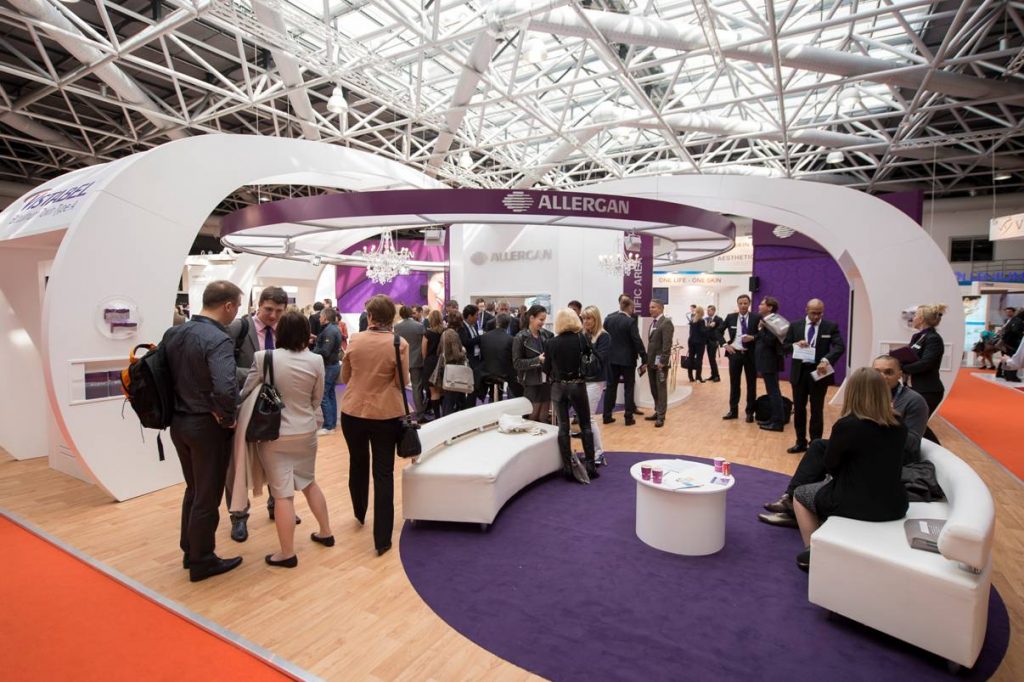
Associating your brand with an event couple your brand with theirs. It is vital that you keep that in mind when selecting and narrowing down the possibilities.
Ask the organisers for past programmes to get a sense of the quality of speakers, programme topics, workshops, breakaways, networking opportunities etc.
Also, enquire as to what marketing they have undertaken in the past and what they will be doing for the event you are interested in. Can you piggyback on their marketing to further extend your results of yours? You may be asking what I mean by that. For example, if they intend on advertising in an industry-specific publication, find out what dates their adverts are scheduled to run.
You then book adverts in the same publication, including your stand number in your advert that you will be participating in the event. You have multiplied the effect because you’ve used their advert to enhance yours without paying the hefty price of being a sponsor.
Relevant Feedback and Data
Enquire from the event organisers if you can have access to any surveys undertaken on feedback on previous years’ events. If they say no for the previous year, ask them for years before that. It will still provide you with a guide, at least.
Look for the same words describing the event. You are looking for what sociologists call “the collective behaviour”. According to lexicographer and dictionary expert Susie Dent,
“the average active vocabulary of an adult English speaker is around 20,000 words, while his passive vocabulary is around 40,000 words.”
An interesting study titled “Crowd characterization for crowd management using social media data in city events”, published in Travel Behaviour and Society, July 2020, editiondiscusses crowd behaviour where they used demographics, city-role, crowd temporal distribution, social media post locations, Point of Interest (PoI) preferences, and word use in social media to determine visitor profiles at two events held in Amsterdam.
What are the ways to find the right fit?
Trial and Error
If you have the patience, time and budget, you can narrow down the field to your top 3 and participate in each one to determine which trade show gave you the desired results you were looking for.
Unfortunately, I don’t think this is a good strategy because each event held is different because of the people attending and the energy created. You may have a new show that can give you a better experience and results than a more established one.
New conferences, trade shows and exhibitions have an energy that is different from more established ones. It’s the value of the unknown, much like the anticipation of Christmas when you’re a child. Unfortunately, it is easy for complacency to creep in when attending long-running events. Without realising it, delegates, exhibitors, etc., have created a mental picture gathered from experience that means they are anticipating certain behaviours, e.g., networking breakaways, etc.
An excellent example to demonstrate this is the Oscars. We all know what the Oscars are about, but what makes them stand out besides the slaps and wardrobe mishaps is when they deviate from the formulae. It takes bravery to do this by the event manager, but I believe it’s what keeps an event fresh.
Rather invest in attending your desired shows as delegates before attending as an exhibitor. It will provide you with insights on the quality of the production, what your visitors to your stand will be experiencing etc.
Use the opportunity to rate your competitors that are exhibiting. You can create a ranking system to rate your competitors’ booths by ranking interactions, the visual impact of their booth, signage, layout, product displays etc.
Sneak up on Competitors
One of the areas in your research not to be overlooked is gathering info on your competitors. Find out what delegates and customers say about their services and/or product.
Why Reviews Matter
Amazon and so many other sites have grown because of customer feedback. We trust what others say about services and products more than what sellers say about themselves.
The feedback is genuine
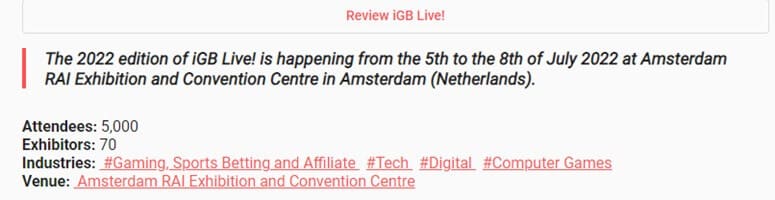
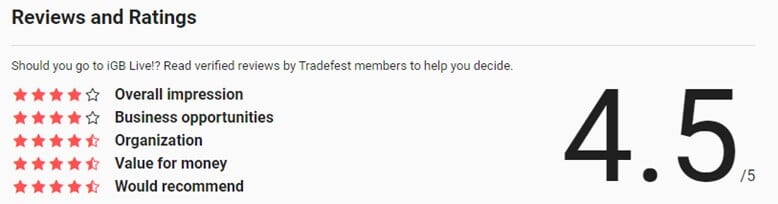
That’s where Tradefast really comes into its own. The site is driven by feedback from different points of view to give readers an overall sense of the value that could be derived from attending a particular trade show. The website provides attendee and exhibitor numbers and city and event locations to give you an idea of the size and scope.
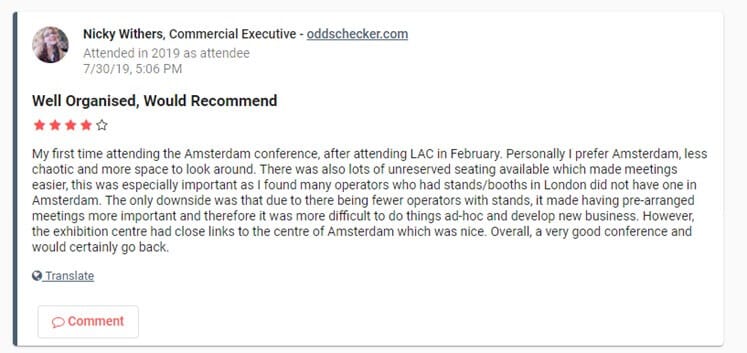
See what Attendees say
Tradefast uses a ranking of 1 to 5 for attendees to rank the value they received from an event. They rank 5 areas to provide valuable insights as to whether that is the trade show meets your needs.
Exhibitors share their opinion
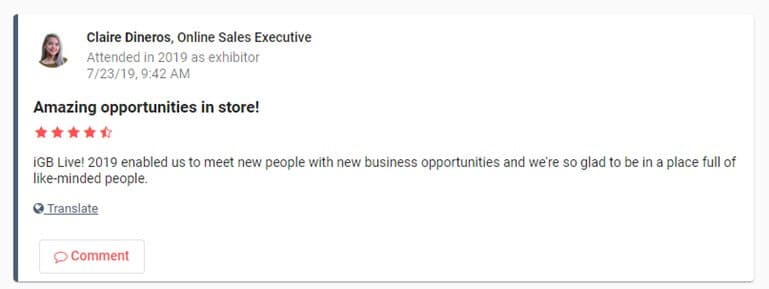
The comment below is gold dust. They’ve invested time and money into exhibiting, and reading feedback from fellow exhibitors gives you insight as to where they received value, what could be improved etc.
Conclusion
As we come out of hibernation from the pandemic, coupled with more challenging economic environments, getting the right trade show is so much more crucial.
If you have the time and budget, attend your shortlisted events to get valuable insights into the organisation. Speak to exhibitors and ask them for comments, especially around areas that you need to focus on, such as launching a new product, networking or contact gathering.
Ranking all the data gathered from your various sources can make the decision easier without skewing the data with personal preferences. A simple Excel spreadsheet can easily do the job.
As much as we have focused on selecting the right trade show, conference, or exhibition, do keep in mind that post evaluations are incredibly valuable to ascertain whether your choice was worth the investment and whether it should be repeated.
A few things to consider are what worked, where to improve, and the value of following up and tying the follow-up correspondence with the same look and feel of the exhibition to make it easy to connect the two.
But most of all, enjoy the experience. That joy comes through in all your interactions and draws delegates to your stand.