
There are two points of view about getting more out of virtual events; one is from the exhibitor, and the other is from the event organiser.
I’m going to share with you what I learned from my experience and, more significantly, how not to make the same mistakes.
During COVID, many event managers turned to the virtual option to ensure they ran their events and fulfilled their obligations.
However, things have changed since then.
Now, it’s a choice for the event organiser, and exhibitors at trade shows whether they would like to do in-person exhibiting, opt for a virtual option, or even do both.
Exhibitors Perspective
As part of your decision-making process, I suggest scrolling through the contacts and/or visitors who visited your tradeshow booths in the previous 5 years. Usually, it would be 3 years, but we need to add another two for the pandemic years. Learn Tactical Guide to Trade Shows from our other blog.
What you want to check is the frequency of attendance. What percentage of visitors come annually, every 3 years, etc.? If your research determines that most of your visitors only come every 3 or 4 years with a low conversion rate, then perhaps a virtual option would be better to ensure you reach your ROI and be more cost-effective.
However, do seriously consider the desire and technical ability of your target market to participate in virtual events. If you see the value of virtual events moving forwards, it would be worth undertaking market research.
Do bear in mind the type of industry you operate in, as some industries lend themselves more easily to virtual than others, such as mining and construction.
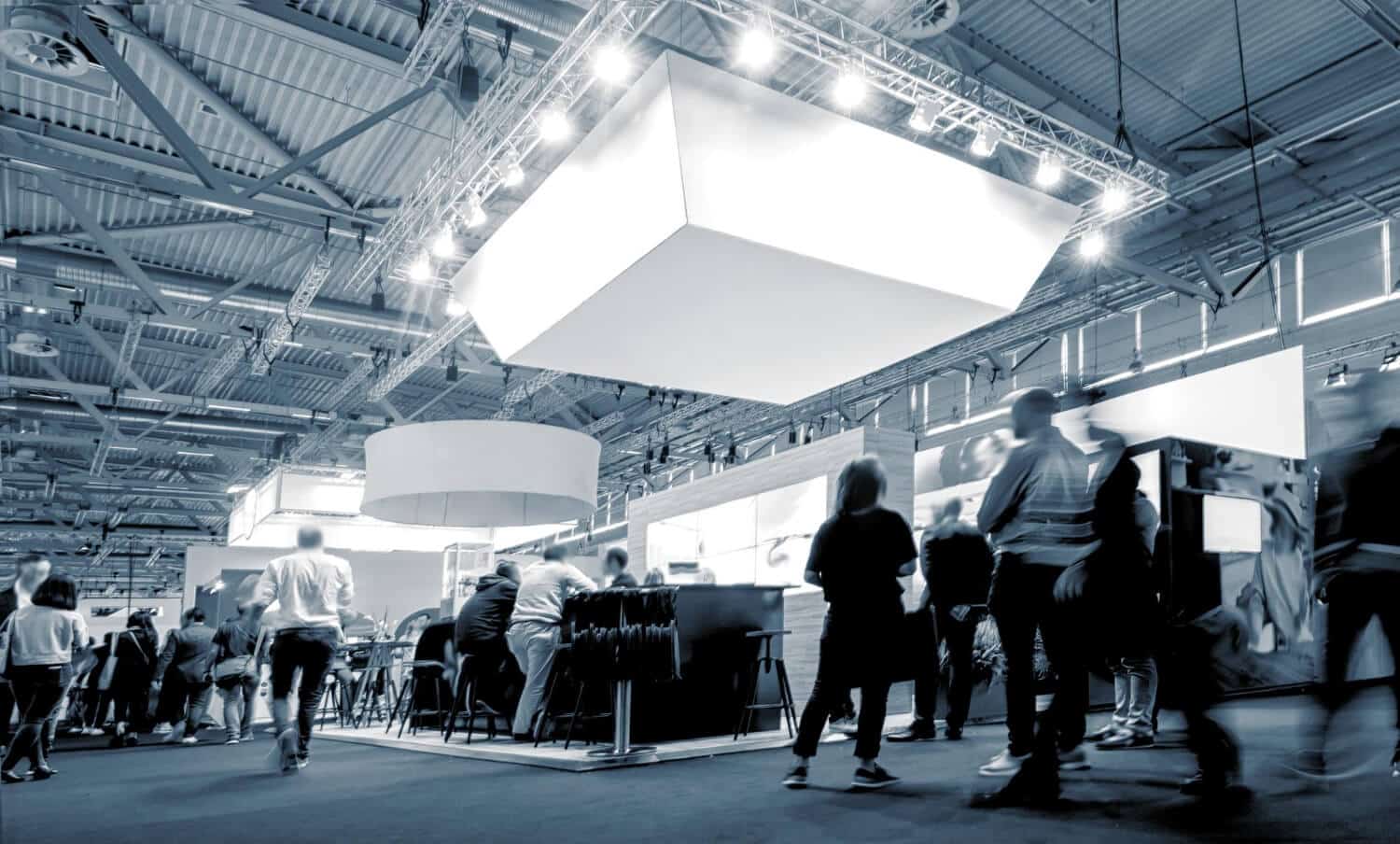
In-person events are familiar, and we naturally know how to communicate and interact with delegates. You can design your stand to easily share your objectives of launching a new product/service or selling one.
Virtual events are, in my opinion, more work. It would be best if you had an excellent and more considered communication plan to prompt connectivity to replace the in-person chat. It would be best if you had some of the same skill sets of being able to strike up conversations, but they also need to have excellent typing speed, as there is nothing worse than trying to communicate with someone in a chat room and their typing speed is slow and/or coupled with bad spelling.
When undertaking your research, also look at your demographics. If your target audience is in their 30s, their communication would include many abbreviations that they use in SMS/Whatsapp. However, a target age over 50 would think you’re lazy and incompetent if you use the same communication shorthand.

The virtual format does allow you to spread your net much further than your usual location-specific one. Virtual events are global events. Your marketing to encourage visitors to the exhibition and your particular stand can be specific to your area of expertise but beyond your national borders.
A virtual event costs roughly 75% less than an in-person event. Event planners typically save money on the venue, setup, breakdown, accommodations, meals, travel costs, etc. However, staffing costs will be higher to ensure a successful event.
Software
Before signing up for an exhibition, ask the event manager which virtual software system they will use. This is vital as not all systems are the same; some are better for exhibitors and others for delegates.
Irrespective of the software, ensure you have control of building your own virtual stand. This is crucial. It would help if you were in control of the look and feel of the virtual stand, videos, slides, handout material, etc. The process of uploading all the above will also make you and your team more familiar with the software and its limitations.
The event planner will more than likely send you links to videos on how to maximise your user experience. Watch them. It sounds so basic but doesn’t assume that because you’re technical or used one virtual software, you can wing it. Ensure you and your team spend the time to become very comfortable and carry out tests.
Check that the organiser has allocated specific staff to assist you over the day(s) of the virtual trade show. Ask what the ratio is. It would be preferable for anything under 1:5 to ensure attention and assistance to guide you through to achieve your goals. Schedule regular meetings with the designated person to keep them updated on your goals, collateral, etc. The more they are involved, the more they will be able to supplement what your staff is doing as well as add value to the organisers’ aims.
The main area where virtual is more hard work, in my opinion, is as an exhibitor, you must be much more proactive.
Draw up a strategy of starting conversations with visitors and piggyback on what speakers are talking about, if there are any. Think about what material you can demonstrate in the best format at the appropriate time to illustrate your company’s thought leadership and abilities. For example, a video demonstrating a product/service illustrates what the speaker was talking about. It will make your message so much more powerful without feeling intrusive or opportunistic.
Run competitions with instant prizes. Vouchers from Amazon or any local retailer are a great idea, or a voucher for time with an eminent businessperson or business coach may be of interest. I’m sure you can come up with a list that is relevant to your sector. Run a draw where delegates or visitors have to check something, such as watching a video to get the answers. Have a time limit of a few minutes. Do the draw almost instantly and send the prize immediately. Post it on social media. Ask the winner to comment or take a selfie as a winner, as well as a post on their social media.
The Organiser
When I was looking at virtual software, I must confess that price was at the top of my list, and, thereafter, functionality. I would strongly suggest that you instead focus on functionality first. I learned that I might save on money, but I would not save on time because it meant that I had to load each exhibition stand and all its collateral. It was extremely time-consuming and frustrating for the exhibitors.

It also meant they did not learn how to use the software and relied heavily on videos to demonstrate how to use the software. But software companies, in the main, don’t understand the other side of the fence and their objectives and limitations in understanding software and functionality.
As an organiser, I would suggest a team with slightly different skill sets.
| Title | Abilities | Functions on the Day |
|---|---|---|
| Social Media Liaison I would suggest working on a ratio of 1:4 exhibitors and a ratio of 1:3 speakers. | Comfortable with social media postings across Facebook, Instagram, Twitter, Pinterest etc. | To constantly post on social media short videos of speakers, links to exhibitors, videos of exhibitors etc. To chat with visitors. Post competition results and gets selfies of winners. |
| Exhibitor Liaison I would suggest working on a ratio of 1:3 | Very comfortable with your virtual software option. Spent time with each exhibitor to understand their goals, collateral etc. | Act as a prompter if required to start conversations with their team and visitors. Send messaging to exhibitors as reminders regarding schedule timings, e.g. video etc. To send collateral to the social media liaison. |
| Speaker Liaison You can have one person undertaking this responsibility, but if you have multiple streams, I would work on a ratio of 1:4. | Very comfortable with your virtual software option. Spent time with each speaker and their presentation. | Send messaging to speakers as reminders regarding schedule timings, e.g. video etc. To send collateral to the social media liaison. |
| Sponsor Liaison I would suggest working on a ratio of 1:1 | Very comfortable with your virtual software option. Spent time with each exhibitor to understand their goals, collateral etc. | Act as a prompter if required to start conversations with their team and visitors. Send messaging to exhibitors as reminders regarding schedule timings, e.g. video etc. To send collateral to the social media liaison. |
| Software Technician | It’s worth searching for a software expert on job sites, etc. If you can’t find someone spends the extra money on paying for the software for more time as well as training for the allocated person to become highly proficient in the software. They will need to be able to provide insights, tips etc to your staff as well as to exhibitors, sponsors and speakers. | Ensure the smooth running of the software. Liaise with the others constantly to ensure material etc is lined up and ready, be it from exhibitors, speakers or sponsors. |
| Delegate Experience Liaison I would suggest working on a ratio of 1:20 or 1:30 | You want someone proficient in social media who is chatty and can encourage conversation. | They need to subtly push delegates to engage with the content, be it from exhibitors, speakers etc. |
Virtual events can be excellent tools to share knowledge in short time bursts, but I don’t believe are avenues for launching products. The staff required is much higher than an in-person event, and they will be required to invest significant time in learning different virtual event software to ensure your company’s ROI is met. Read more about how virtual events don’t work before investing significantly in a new platform.
Live or in-person events are still the best avenue to engage with current and potential customers. Contact UCON to find out how they can assist you in meeting your company’s aims at your next trade show.